Making animal testing optional, then obsolete.
On April 20, the FDA shared the first-year progress of its Roadmap to Reducing Animal Testing. Commissioner Marty Makary called for "human-relevant methods that actually predict how drugs work in people."
We agree. And we'd push the premise further: animals were never in drug development because they predict human biology well. They were there because, for the entirety of modern pharmacology, nothing else could watch a living human cell respond to a molecule over time.
That is about to change.
Drug discovery has a seeing problem
A small molecule enters a cell and sets off thousands of chemical reactions, unfolding across milliseconds, minutes, hours, and days. The cell responds in a continuum. Then responds again. Then again.
How does the industry measure this in 2026? We kill the cell. We sequence its RNA. We infer what chemistry must have happened from the genetic aftermath. It's like studying a concert by reading setlists pulled from the recycling. The dynamics, the improvisation, the moments where everything changes — all gone before the measurement starts.
This is the quiet reason animals persist. They let us observe a system over time, even when the system is the wrong one. Animals are not a model of human biology. They are a placeholder for a measurement that, until now, could not be taken.
Introducing trajectomics
Two problems pervade every readout:
- The wrong model
- The wrong measurement
Animals gave us time, but at the cost of species. Organoids and microphysiological systems moved the model closer to human, but still require destroying cells to read them out. Virtual cell and in silico toxicology models scale predictions, but inherit their training data from those same destructive assays. Each incumbent solves one axis. None solves both.
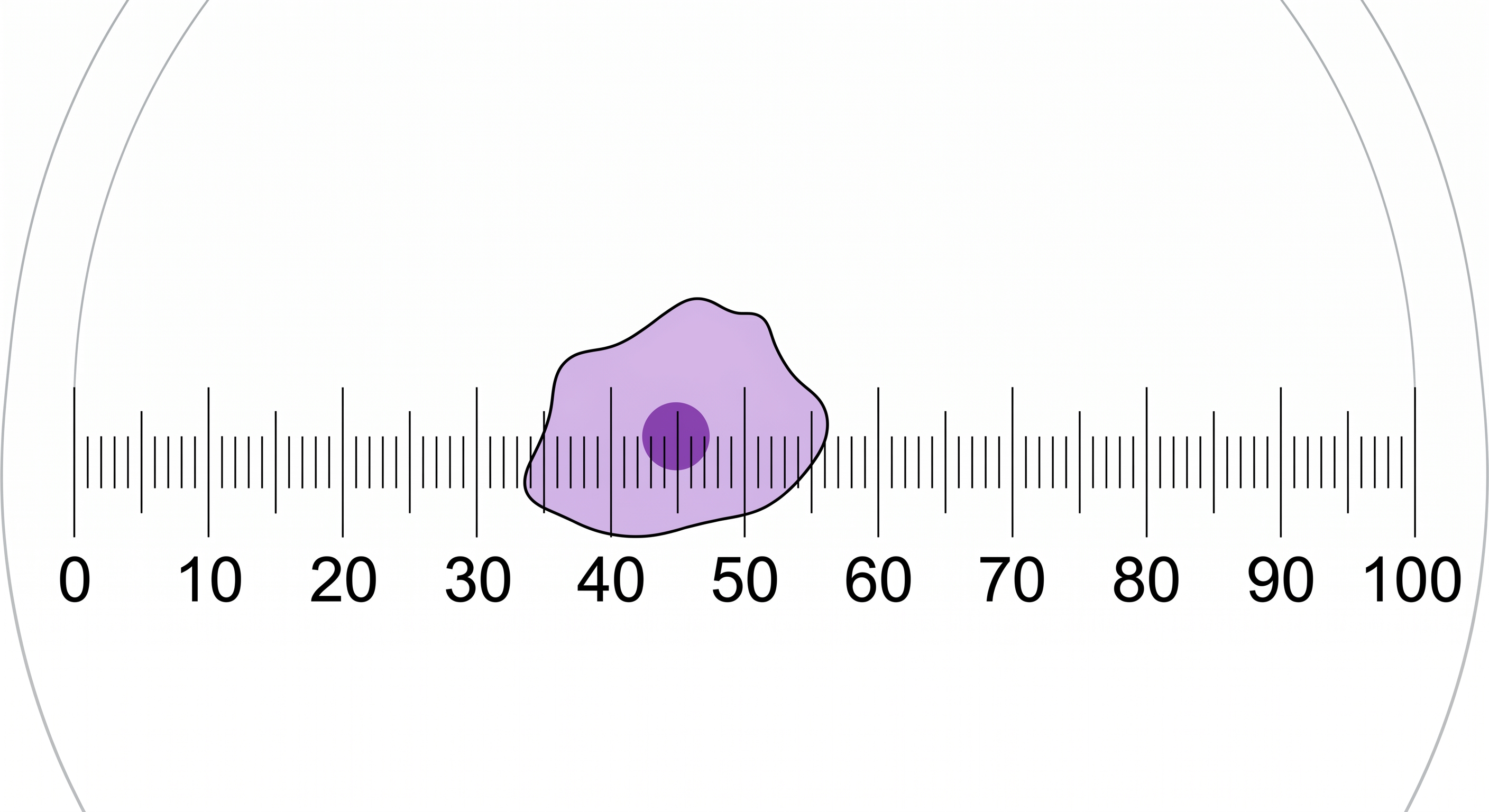
At Precigenetics, we built Cell Cinema — a platform that reads the chemistry of living cells directly and continuously, label-free, without destroying them. Using spectroscopy tuned to capture the full vibrational signature of a cell, Cell Cinema acts as a hyper-assay: observing live cellular chemistry propagating in real time, across the spatial axes. Every frame is a complete chemical snapshot. Every series of frames is a trajectory.
We call our new data category trajectomics: the continuous chemical trajectory of a living cell. No fluorescent labels, fixation, or destruction. No hypothesis required in advance about which protein to watch. The cells keep living. The measurement keeps running.
Toxicity is where this starts
The clearest near-term application is also the most urgent one: predicting human drug toxicity without ever using an animal. A single trajectome measurement resolves:
- Toxicity signatures that emerge hours to days before visible cell damage
- Compound stratification across libraries of candidates in a single experiment
- Mechanistic fingerprints that distinguish on-target effects from off-target chemistry
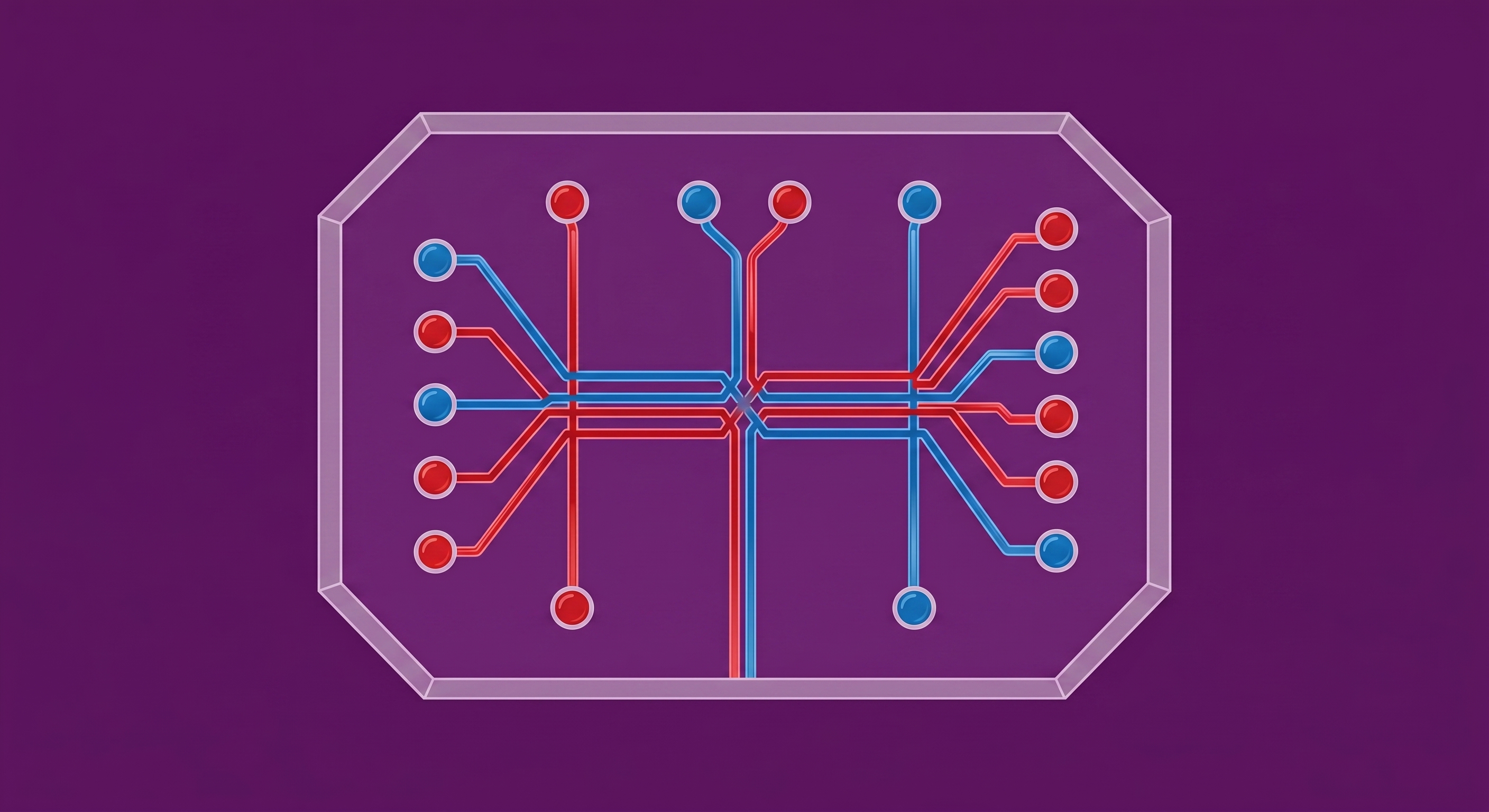
The cells are human, engineered into liver sub-structures on a microfluidic chip designed for perfusion and continuous optical access. The readout is continuous. The cells survive the experiment as living tissue, responding to perfused compounds over time. This is not an alternative to animal toxicology. It is precisely what animal toxicology was a substitute for.
Why this matches the FDA roadmap
The FDA's Year 1 report returns repeatedly to a single criterion: methods that actually predict how drugs work in people.
Organoids are a step. Microphysiological systems are a step. AI models trained on historical data are a step. But every one of these approaches shares a ceiling — they ultimately rely on endpoints drawn from destroyed cells, averaged populations, or inferred dynamics. Trajectomics is continuous, single-cell-resolved, and native to living human tissue. It produces the ground-truth temporal data that every virtual cell model and every in silico toxicology system is currently missing. If the FDA wants drug development built on human biology, the substrate now exists.
What comes next
Roughly 90% of drugs that clear animal testing fail in humans. Patients wait. Billions are spent chasing effects that do not translate. Animals suffer to generate data that is, by the industry's own admission, a poor predictor of what will happen in people. The problem was never that the science is hard. The problem was that we were measuring the wrong thing, in the wrong system, with tools that required destruction.
We don't think animal testing should be reduced. We think it should be made obsolete with something better. For the first time, the instruments exist to do it. 🎬
Precigenetics is the deep-tech biology company building Cell Cinema — the first platform for continuous, label-free, live-cell chemical trajectory measurement. Learn more at precigenetics.com.